ICS (Computer Science)
The premier intermediate track for tech-enthusiastic students, combining Computer Science, Mathematics, and Physics for direct entry into BSCS and BSAI.
Program Overview
The ICS program at Pak Royal College provides an ideal blend of computer science theory, practical coding fundamentals, and higher mathematics. Designed for students aspiring to build rewarding careers in information technology, software development, data science, and cybersecurity, the program provides modern computer labs, high-speed fiber internet, and comprehensive preparation for university admission entrance tests (FAST, NUST, PUCIT, ITU, COMSATS).
Why Study ICS (Computer Science) at Pak Royal College?
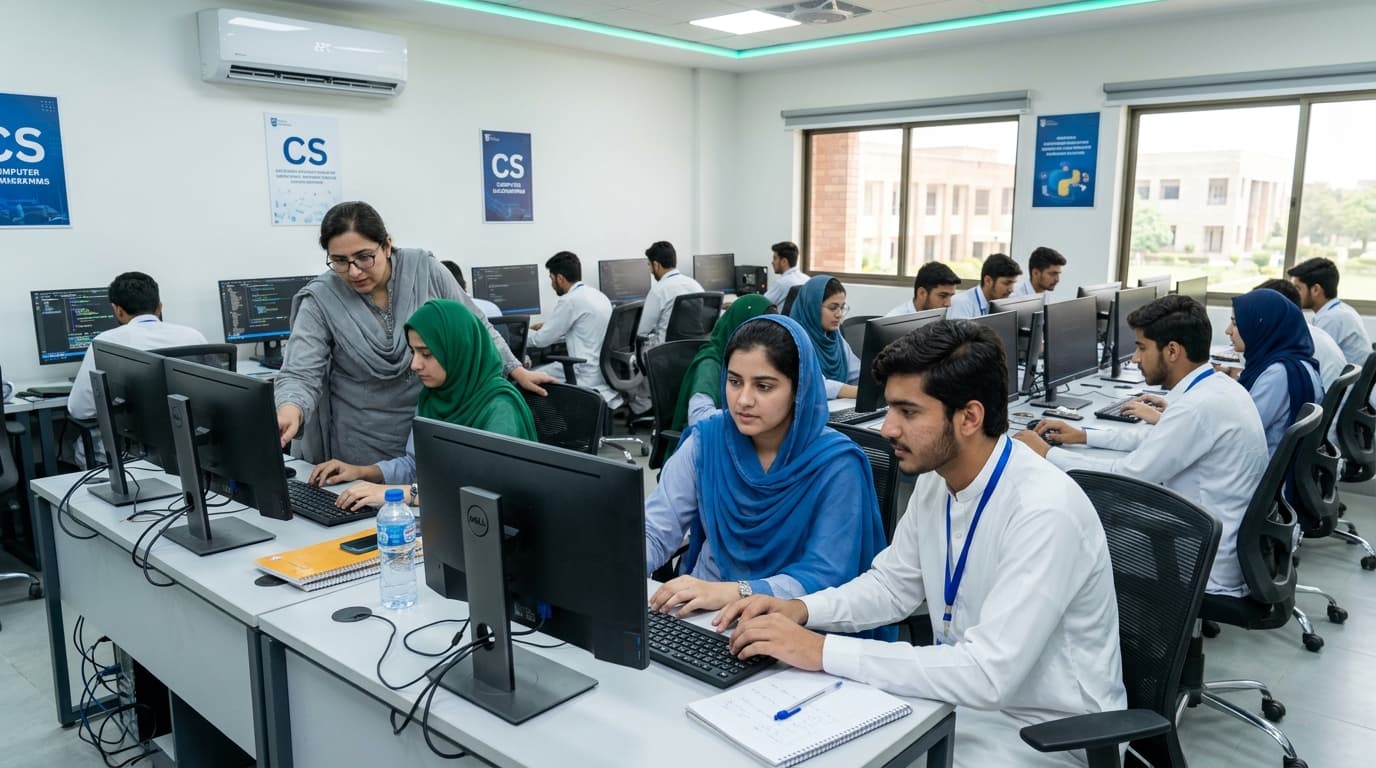
Cutting-Edge Computer Labs
Hands-on coding on modern workstations with C, C++, Python, and relational database tools.
Direct Pathway to BSCS / BSAI
Built specifically to give students an unfair advantage in university computing courses.
Experienced Tech Faculty
Learn programming paradigms from software engineers and computer science professors.
Fast-Track University Entry Test Prep
Special math and computing entrance test preparation for FAST, PUCIT, NUST, and COMSATS.
Academic Curriculum & Semester Breakdown
Explore course codes, credit distribution, and practical lab components across each academic semester.
| Course Code | Course Title | Credit Hours | Course Type |
|---|---|---|---|
| CSC-101 | Computer Science I (Basics of IT, Information Networks, Data Comms, OS) | Core Science | Board Core + Practical |
| MTH-101 | Mathematics I (Algebra, Matrices, Trigonometry, Sequences) | Core Science | Board Core |
| PHY-101 | Physics / Statistics I (Mechanics, Waves, Vectors OR Statistical Theory) | Elective | Board Core |
| ENG-101 | English Compulsory I | Compulsory | General Education |
| URD-101 | Urdu Compulsory I | Compulsory | General Education |
| ISL-101 | Islamic Education / Ethics | Compulsory | General Education |
| TRJ-101 | Tarjuma-tul-Quran I | Compulsory | General Education |
Program Learning Outcomes
Programming Logic
Master structured programming, control flow, loops, arrays, functions, and pointers in C/C++.
Database Systems
Understand relational database management, SQL queries, table normalization, and data models.
Mathematical Reasoning
Develop sharp analytical skills in matrices, trigonometry, calculus, and vector spaces.
Systems & Networks
Understand hardware architectures, operating system principles, data communications, and network protocols.
Skills & Technologies You Will Master
Where Can This Degree Take You?
Potential career trajectories and roles pursued by our graduates.
Advance directly to a 4-year BS in Computer Science.
Enter software engineering, DevOps, and cloud systems.
Specialize in machine learning, deep learning, and robotics.
Pursue offensive and defensive information security and network defense.
Specialize in big data analytics, business intelligence, and statistics.
Admission Requirements
Required Application Documents:
- Matric Result Card / Certificate
- CNIC / B-Form copy
- Father / Guardian CNIC
- 4 Passport Size Photographs
- Character Certificate
Fee & Payment Schedule
* Generous merit scholarships up to 100% available.
Scholarships Available for this Program
- 100% Fee Waiver for 90%+ in Matric
- 50% Fee Waiver for 80%+
- Sports & Co-curricular Scholarship
Frequently Asked Questions
Can I choose ICS with Physics or Statistics?
Yes, students can choose either ICS (Physics + Math) or ICS (Stats + Math) based on their career goals.
Related Academic Programs
Other degree paths aligned with computing, technology, and management.
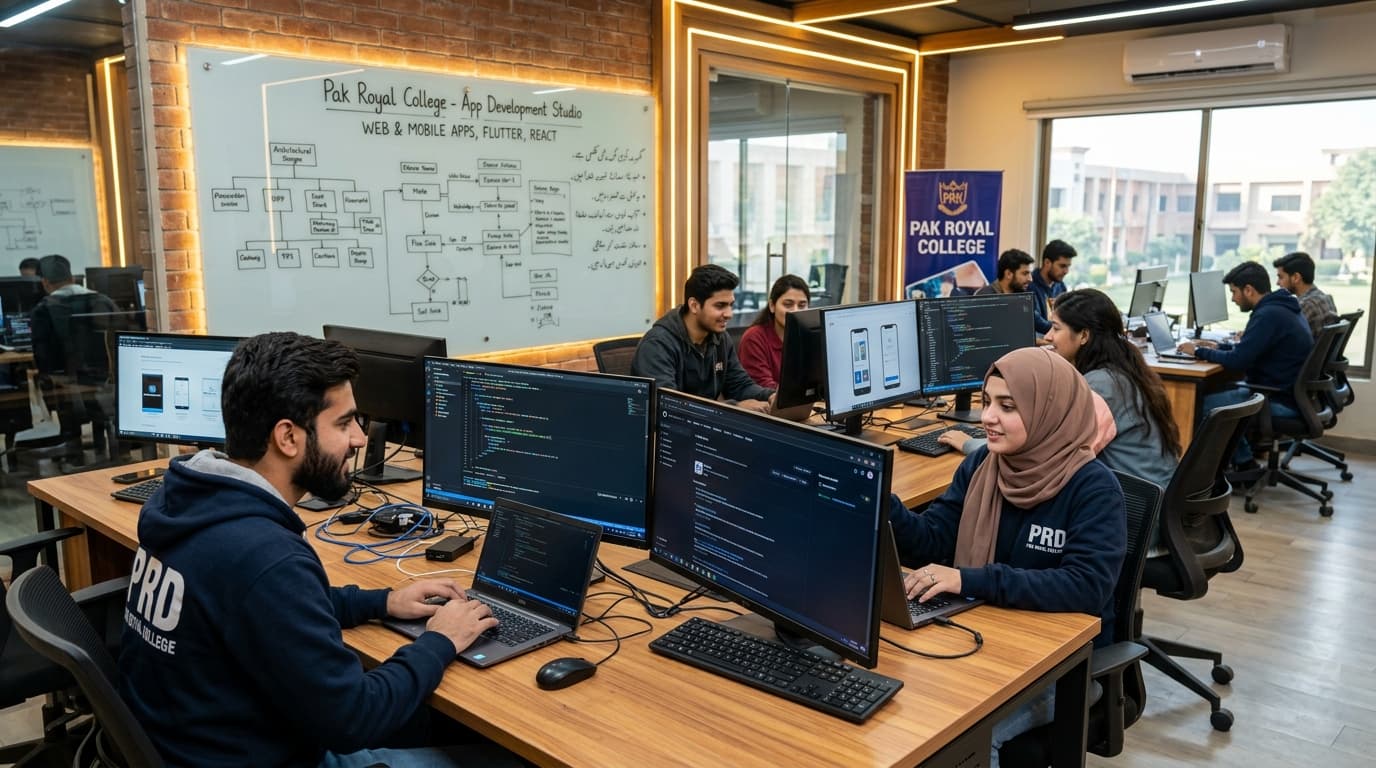
BS Computer Science
A comprehensive four-year undergraduate program focusing on computer systems, software architecture, algorithms, data engineering, and modern computing paradigms.
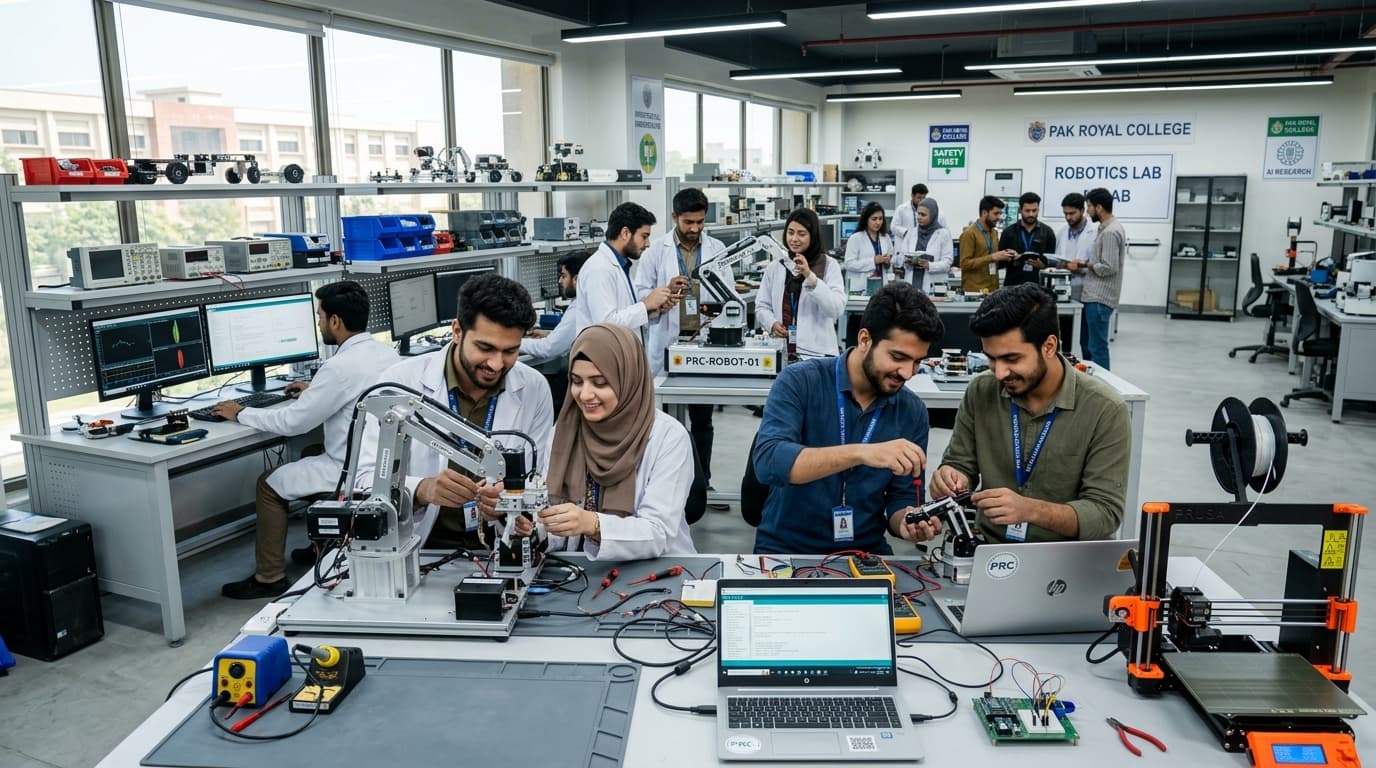
BS Software Engineering
Specialized engineering program emphasizing scalable software design, quality assurance, microservice architectures, and agile enterprise methodologies.
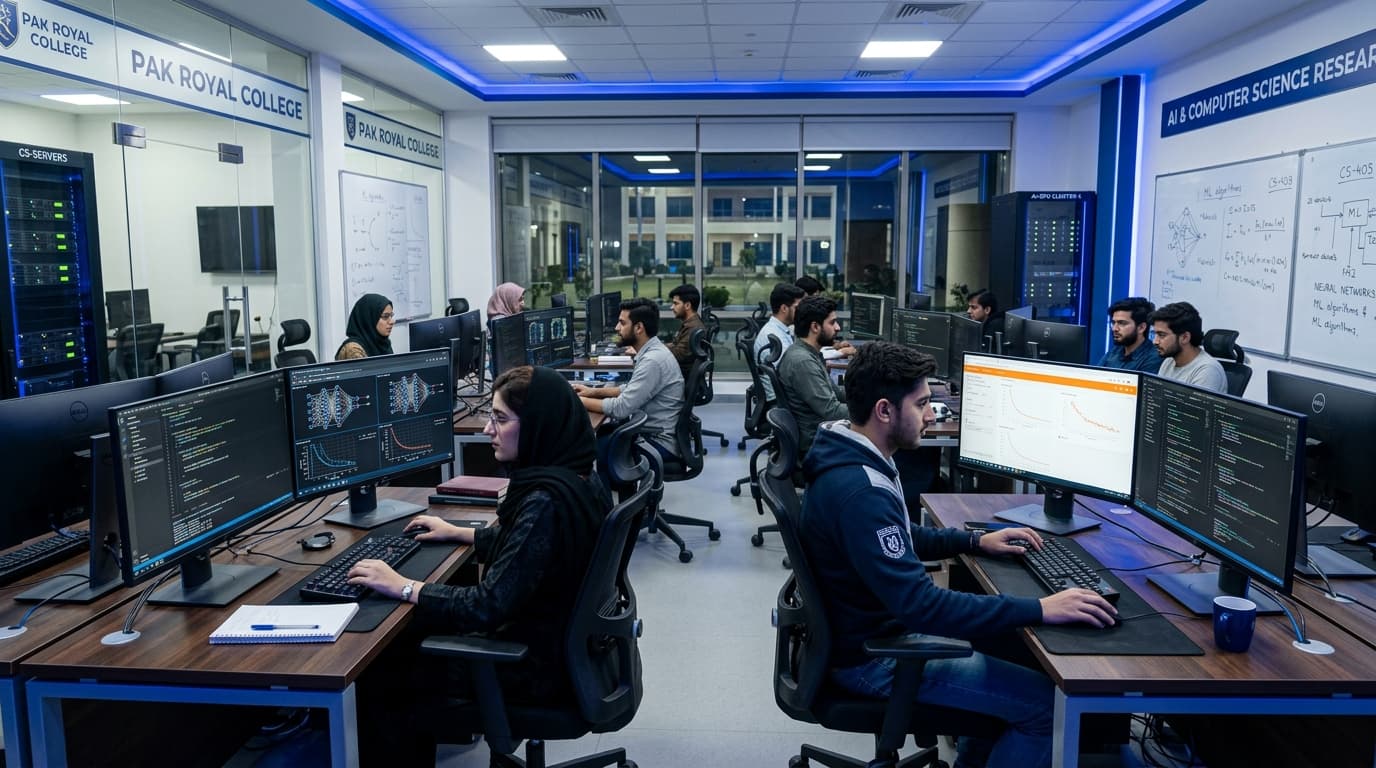
BS Artificial Intelligence
Cutting-edge degree covering machine learning, deep learning, computer vision, natural language processing, robotics, and intelligent autonomous systems.